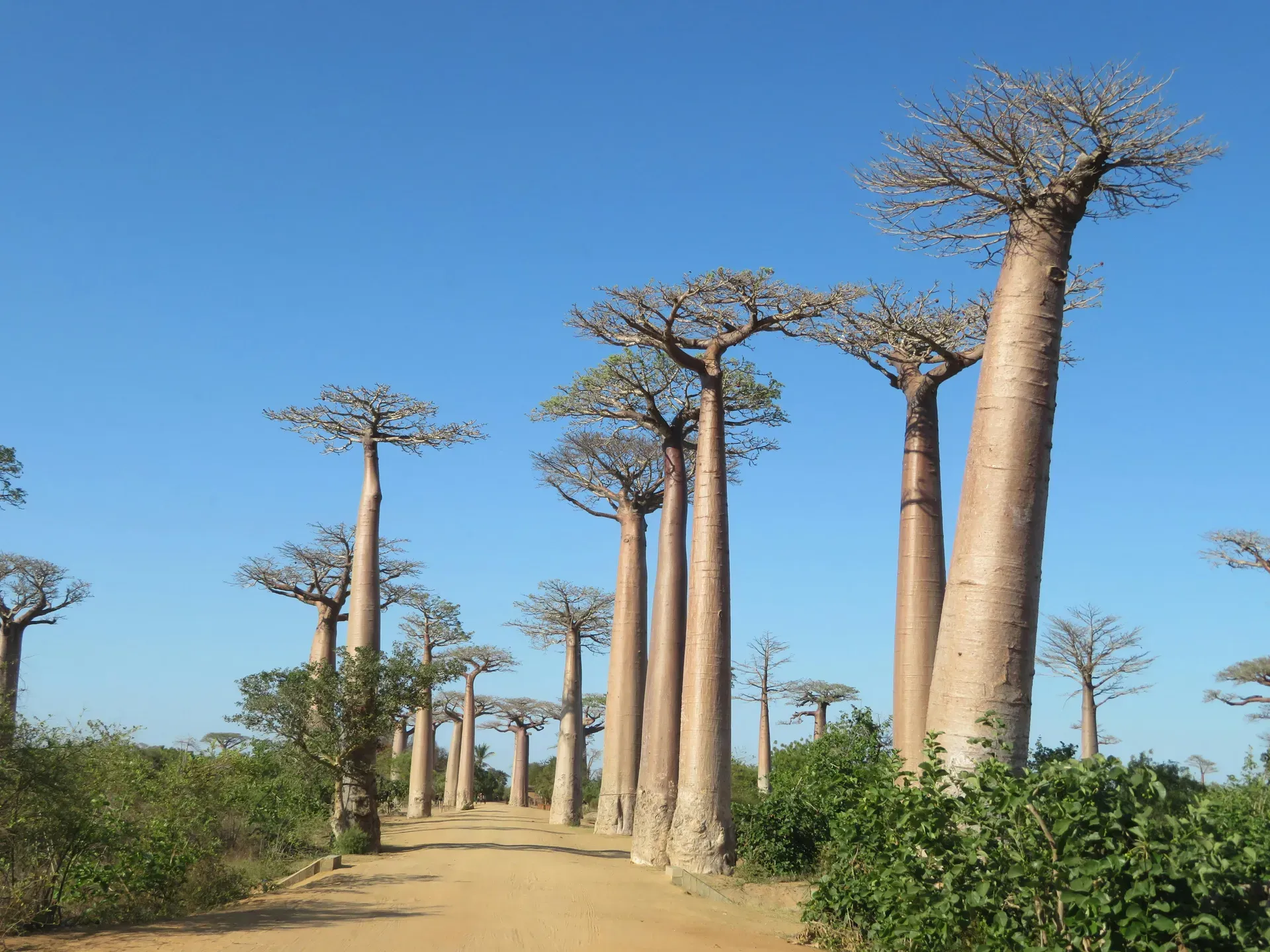
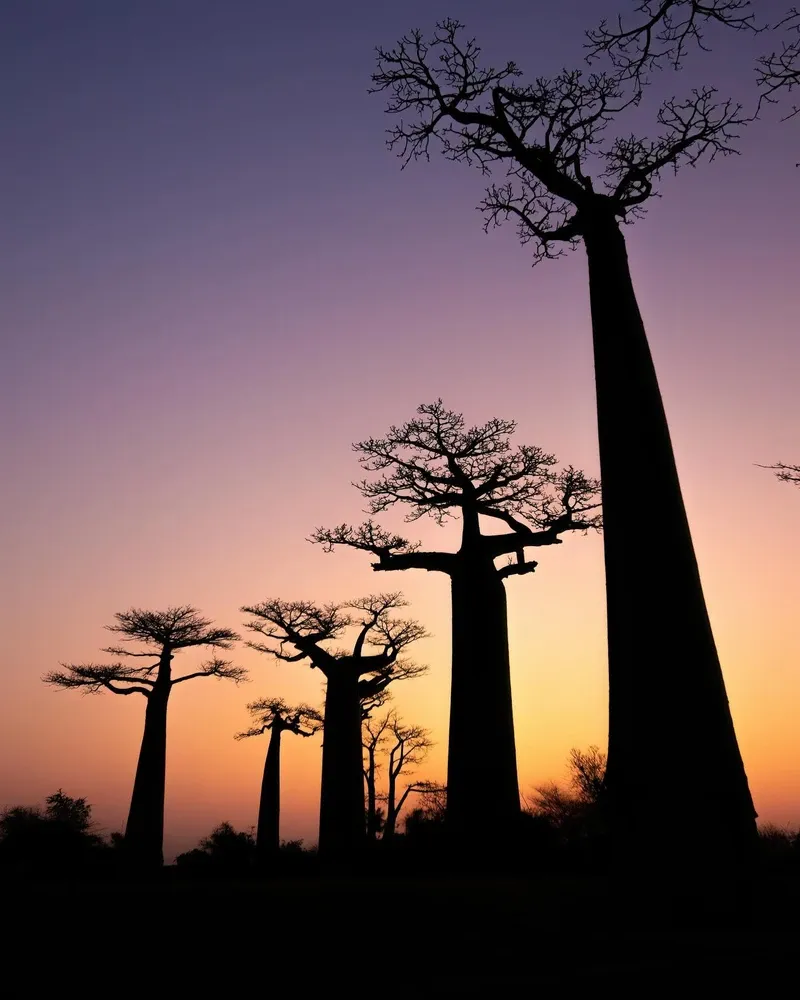
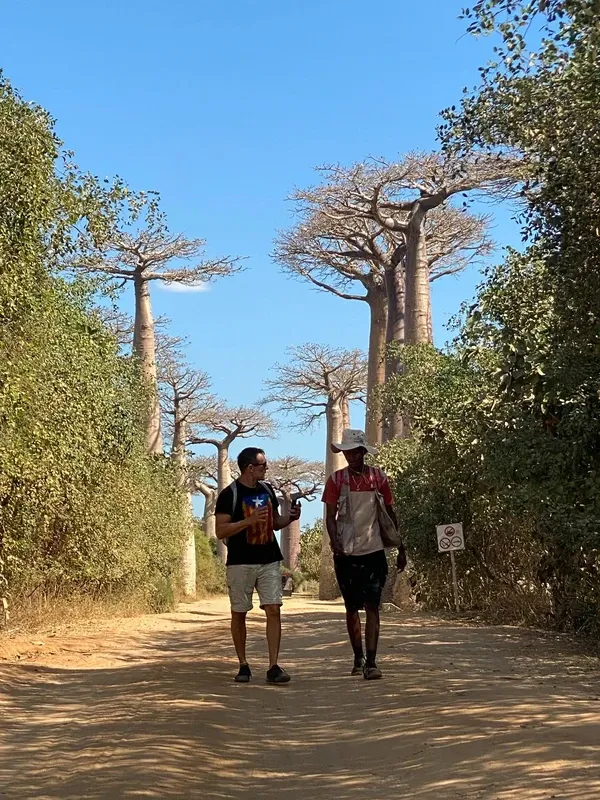
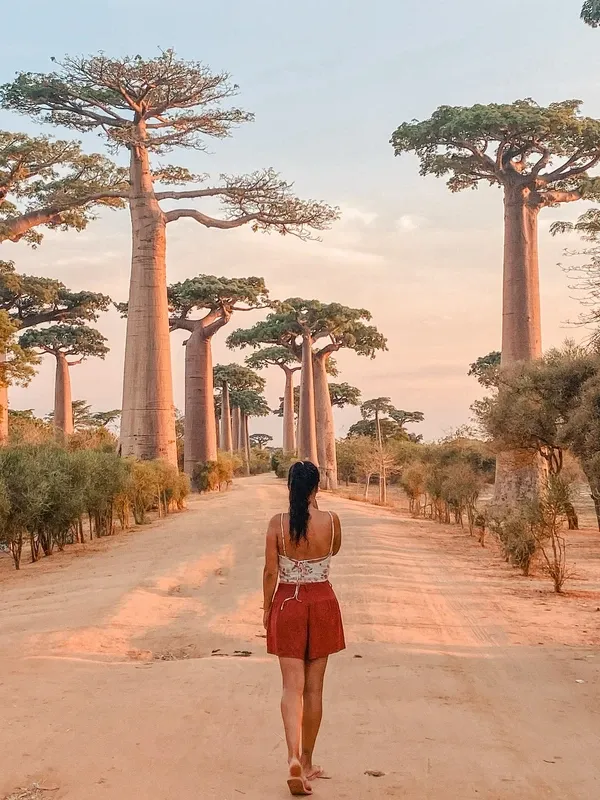
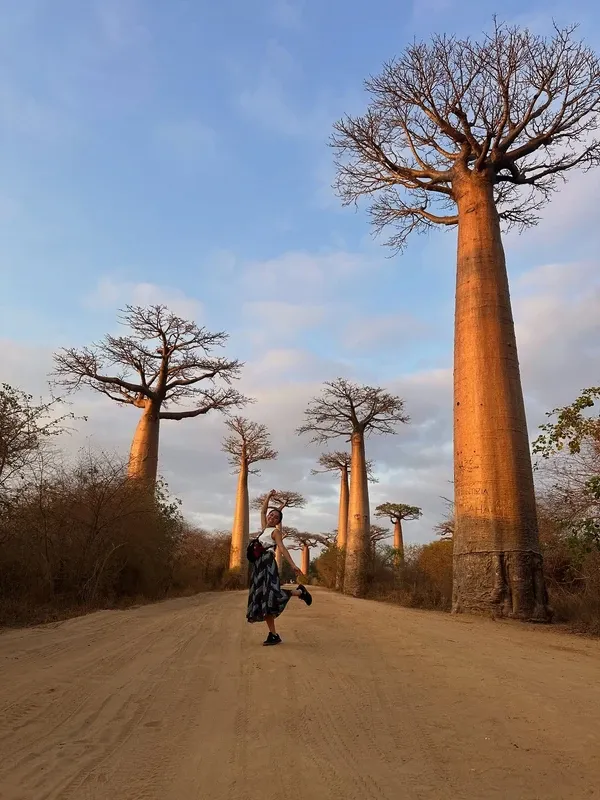
Roughly 20 to 25 towering Grandidier's baobabs line a 260-meter stretch of dirt road in western Madagascar. These 800 to 2,800-year-old sacred giants reach heights of 30 meters, featuring massive cylindrical trunks that turn striking orange-red during sunset.
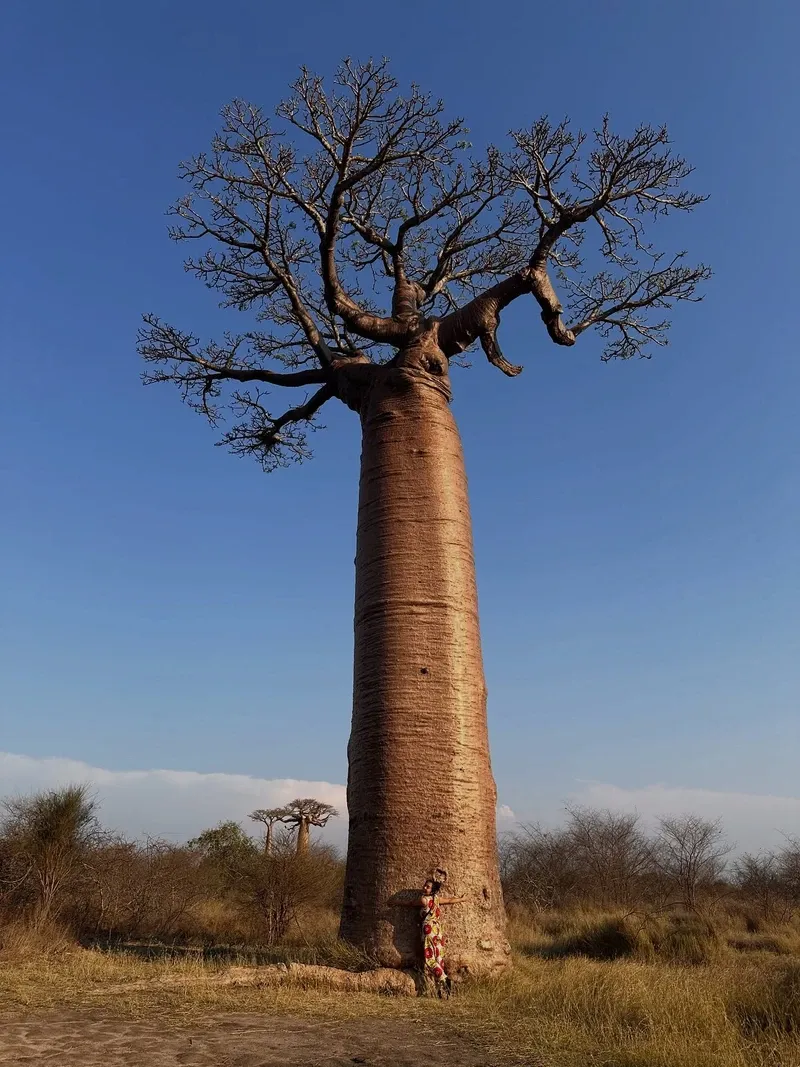
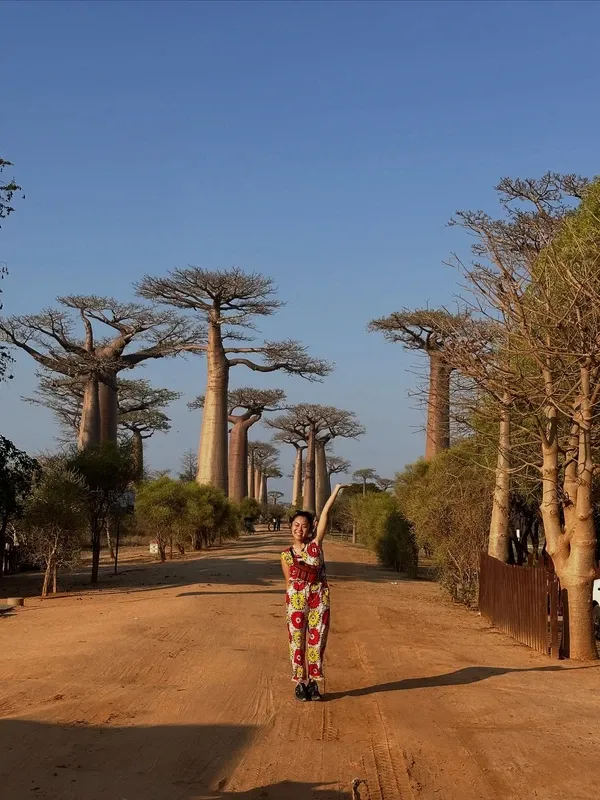
Find Guided ToursThe Avenue of the Baobabs (Allée des Baobabs) is a 260-meter stretch of the Route Nationale 8 dirt road lined with approximately 20 to 25 towering Grandidier's baobabs. Located on a flat coastal plain 20 kilometers northeast of Morondava in the Menabe region, this natural landmark features trees reaching heights of 30 meters. Their massive, cylindrical trunks can measure up to 11 meters in diameter and store as much as 120,000 liters of water. The root-like appearance of their bare branches has earned them the nickname of upside-down trees.
These ancient giants are estimated to be between 800 and 2,800 years old. They did not always stand alone in the open landscape. Originally, the baobabs were part of a dense tropical forest that covered the region. As the local population expanded, the surrounding vegetation was systematically cleared using slash-and-burn agriculture to make way for rice paddies and sugarcane fields. The baobabs survived this deforestation, leaving behind the isolated avenue seen today.
The Grandidier's baobab (Adansonia grandidieri) is an endangered species and one of six baobab varieties endemic to Madagascar. Beyond their botanical importance, the trees hold deep spiritual significance for the Malagasy people. Known locally as Renala, meaning Mother of the Forest, the trees are considered sacred. Villagers frequently use specific, larger trees along the avenue to leave offerings and ask for blessings.
In response to ongoing environmental degradation, conservation efforts formalized the protection of the site. The area received temporary reserve status in July 2007. By 2015, Madagascar's Ministry of Environment, Ecology, and Forests officially designated the avenue as a Natural Monument, ensuring the preservation of these remaining ancient trees.
Discover the full history and cultural significance on our About page.
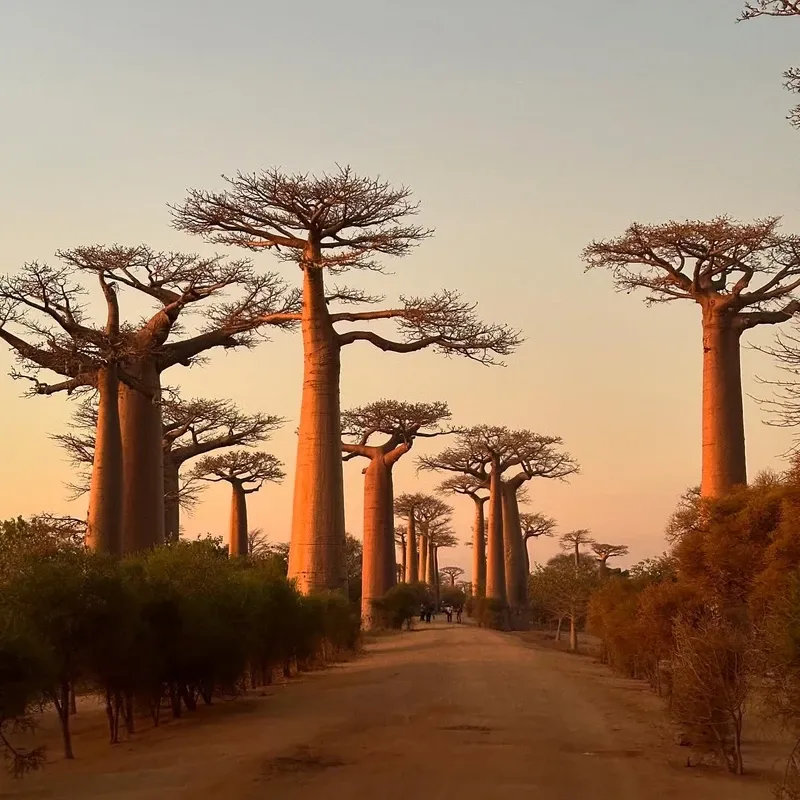
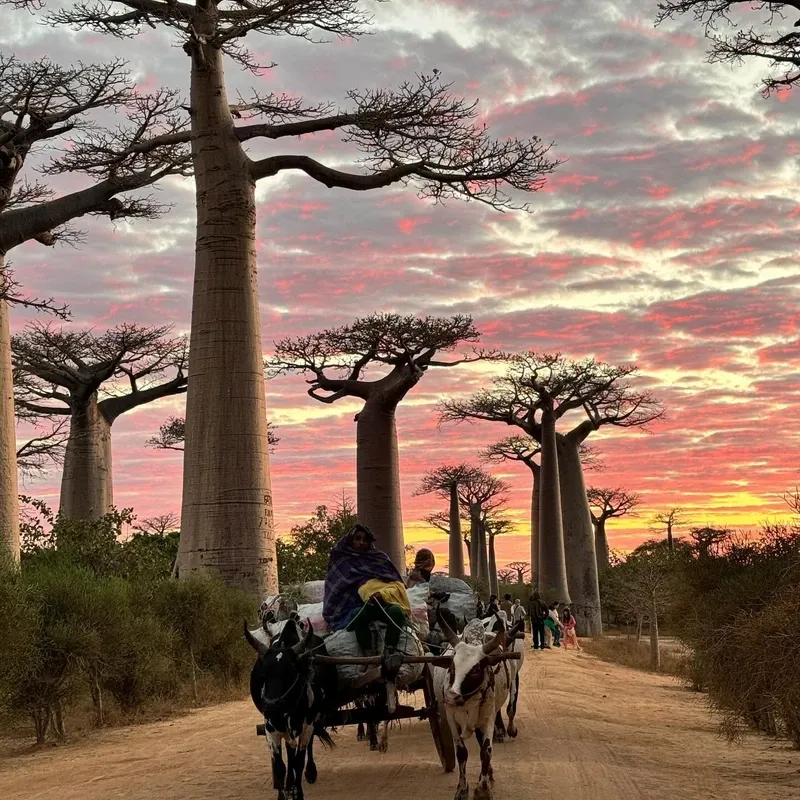
The 60 minutes before sunset turn the massive trunks of the Grandidier's baobabs orange-red, creating striking silhouettes against the sky. Arriving at dawn provides a quieter alternative, allowing you to watch the 30-meter trees emerge from the morning mist before the tour buses arrive.
Located seven kilometers from the main avenue, the Baobab Amoureux features two rare trees naturally twisted together. These intertwined trunks are central to local romantic legends and provide a distinct contrast to the massive, cylindrical 11-meter-wide trunks found along the primary 260-meter stretch of dirt road.
Staying 30 to 60 minutes after the sun goes down reveals the blue hour and the first appearing stars. The area has minimal light pollution, allowing visitors to view the Milky Way framed perfectly by ancient giants that have stood on this coastal plain for up to 2,800 years.
Known locally as Renala, or Mother of the Forest, these trees hold deep spiritual importance for the Malagasy people. Visitors can observe the specific Sacred Baobab where locals leave offerings for blessings, and purchase hand-carved wooden models directly from villagers along the unpaved Route Nationale 8.
Hand-picked tours with free cancellation and verified reviews
The ideal time to visit the Avenue of the Baobabs is during the dry season from April to November, which provides clear skies and reliable access along the unpaved RN8. The wet season from December to March brings heavy rains that frequently make the dirt road impassable.
These dry season months offer clear skies and solid ground for the 20 km drive from Morondava. Temperatures can exceed 32°C, so visitors should carry plenty of water.
The wet season brings heavy rains and high humidity. The dirt road becomes extremely muddy, and by January, the route is often completely impassable for standard vehicles.
March remains wet and potentially impassable, but conditions improve significantly in April and May as the dry season begins. The trees will have green leaves during this transition.
Falling squarely in the dry season, these months provide excellent conditions with reliable road access. The clear skies make it an optimal time for sunset and night photography.
The Avenue of the Baobabs is located along a public stretch of the Route Nationale 8 (RN8) dirt road and remains accessible 24 hours a day, seven days a week.
| Category | Price |
|---|---|
| General Admission | Free |
| Vehicle Parking | 2,000 Ar - 5,000 Ar |
No entry permits or advance bookings are required. While pedestrian access to the site is entirely free, visitors arriving by car, taxi, or tour vehicle will need to pay the local parking fee in cash. It is highly recommended to carry small denominations of Ariary for parking and purchasing items from local artisans.
For complete schedules and ticket prices, visit our Hours & Fees page.
Reaching the Avenue of the Baobabs requires navigating a 20-kilometer stretch of unpaved road northeast of Morondava. Morondava acts as the primary transit hub, offering several transport modes to cover the rough terrain.
📍 Route Nationale 8 (RN8), 20 km northeast of Morondava, Menabe Region, Madagascar
Hiring a private taxi from Morondava is the most common way to travel the 20 kilometers to the site. The drive takes you along the bumpy Route Nationale 8. Drivers generally include wait time in their round-trip fare, allowing you to stay for sunrise or sunset. Be cautious of individuals quoting over 150,000 Ar for this simple route.
Budget-conscious travelers can catch a shared taxi-brousse heading toward Belo-sur-Tsiribihina from Morondava. You will need to disembark at the Marofototra junction after traveling about 14 kilometers. From this drop-off point, you must cover the remaining 6 kilometers to the avenue. This final leg can be completed by walking or hiring a local tuk-tuk.
Renting a four-wheel-drive vehicle provides the fastest access from Morondava Airport. The 16.1-kilometer drive takes just over twenty minutes under good conditions. A 4WD is absolutely essential if you plan to visit during the wet or shoulder seasons. Standard vehicles often find the dirt road completely impassable between January and March due to heavy mud.
Booking a private tour from Morondava bundles your transportation with local expertise. These excursions cover the 20-kilometer distance and provide a guide to explain the specific folklore of individual trees. Most itineraries also include a detour to the Baobab Amoureux, located 7 kilometers from the main avenue. This option removes the stress of negotiating taxi fares.
For detailed transport options and routes, visit our Directions page.
Arrive at least 90 minutes before sunset to secure a vantage point before tour groups arrive. Stay 30 to 60 minutes after the sun drops to capture the blue hour and the Milky Way. Alternatively, visit during the 30 minutes following dawn to photograph the trees emerging from morning mist without the crowds.
The 20-kilometer drive from Morondava takes 30 to 40 minutes along a heavily rutted dirt road. Hire a 4WD vehicle, especially during the wet season from December to March when mud makes the route challenging. Plan to return before dark to avoid regional security risks from cattle bandits.
While walking the public road is free, you need 2,000 to 5,000 Ariary for the parking fee. Carry extra small bills to purchase hand-carved baobab models from local villagers. When booking a private taxi from Morondava, expect to pay between 50,000 and 100,000 Ariary and decline quotes exceeding 150,000 Ariary.
The 260-meter viewing area is completely flat but consists of packed dirt and sand. Manual wheelchairs will struggle on this surface. Visitors with mobility aids should use power wheelchairs or all-terrain tires, as there are no paved paths or formal ramps available on site.
Temperatures frequently exceed 32°C with high humidity, making hydration critical. There are no formal public restrooms at the avenue, so plan accordingly before leaving Morondava. Apply insect repellent heavily before dusk, as mosquitoes become highly active around the trees just as the sunset lighting peaks.
Locals revere the Grandidier's baobabs as Renala, or Mother of the Forest. Do not climb the trunks or carve into the bark, as these actions are strictly prohibited and deeply disrespectful. Always ask for explicit permission before photographing local villagers or ox-carts passing through the thoroughfare.
Located 7 kilometers from the main avenue, these two rare baobab trees have grown naturally twisted together. They are central to local romantic legends and provide excellent photographic opportunities.
This protected area stands out as the best location in Madagascar to observe the Fossa, the island's apex predator. Visitors can also spot various endemic lemur species within the reserve.
This relaxed coastal area features sandy shorelines and active local seafood markets. It serves as a practical resting point before or after navigating the bumpy dirt roads to the baobabs.
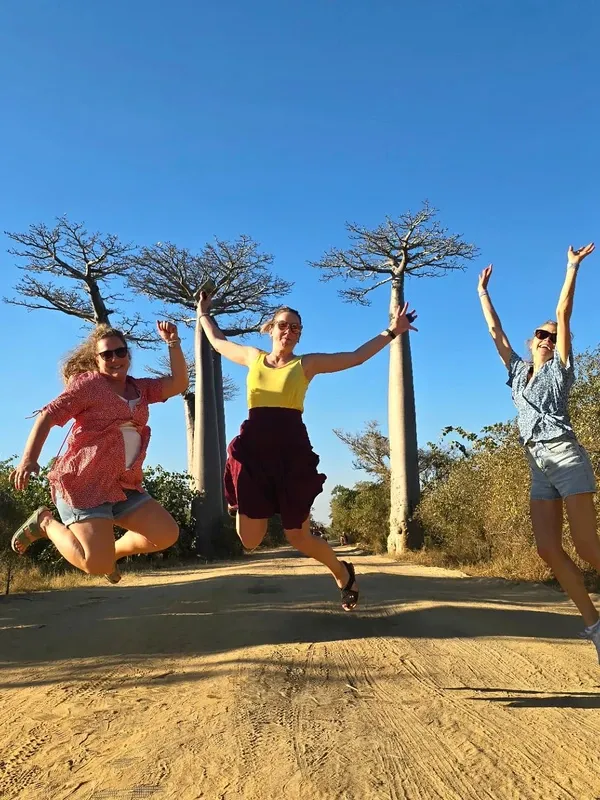
Read what travelers share about their experience visiting Avenue of the Baobabs — from practical tips to personal highlights.

Entry to the avenue is free as it sits on a public road. Visitors arriving by vehicle will need to pay a small parking fee of 2,000 to 5,000 Ariary.
The 60 minutes before sunset and 30 minutes after sunrise provide the best lighting for photography. Arriving at dawn helps avoid the larger evening crowds, while staying 30 to 60 minutes past sunset allows you to see the first stars and the Milky Way.
Yes, but access is difficult between December and March. Heavy rains turn the unpaved RN8 dirt road into thick mud, making a 4WD vehicle essential and sometimes rendering the route completely impassable.
The site is located 20 kilometers northeast of Morondava. You can hire a private taxi for 50,000 to 100,000 Ariary, which covers the 30 to 40-minute drive and wait time. Alternatively, take a shared taxi-brousse for 10,000 to 20,000 Ariary to the Marofototra junction and walk the final 6 kilometers.
No advance bookings or entry permits are required for general visitors. Commercial photography shoots may require local permits, but standard tourists can arrive at any time.
Pack plenty of water and sun protection, as temperatures can exceed 32°C (90°F) with high humidity. Insect repellent is highly recommended for the evening mosquitoes, along with small Ariary notes for parking and purchasing wooden baobab carvings from local artisans.
The 260-meter viewing area is flat but consists of uneven packed dirt and sand. Manual wheelchairs will struggle on this terrain, so power wheelchairs or all-terrain tires are recommended. There are no paved paths, ramps, or accessible restrooms on-site.
The site is generally safe during the day and immediately after sunset for night sky viewing. Travelers are strongly advised against driving the surrounding roads late at night due to the risk of armed cattle bandits, known locally as dahalo.
Browse verified tours with free cancellation and instant confirmation.
Find Tours


